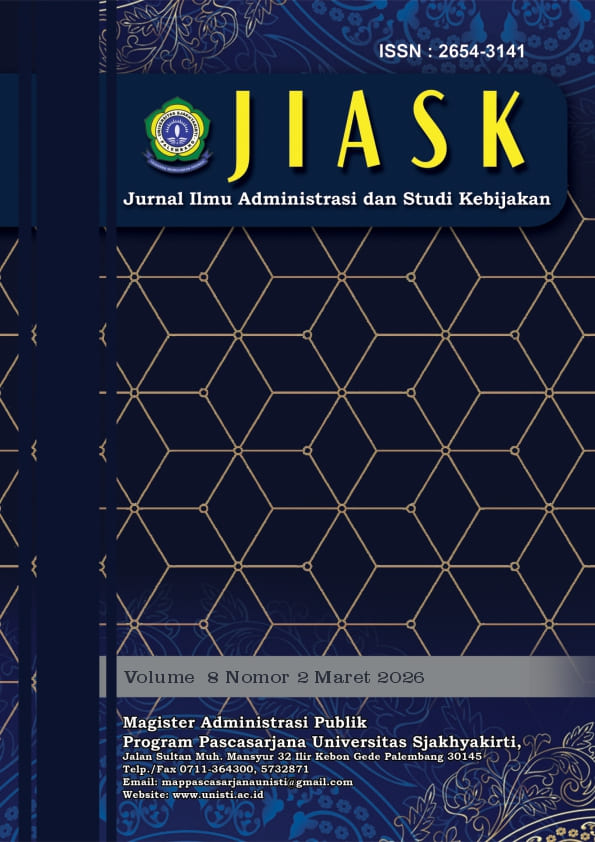
Transformasi Pemilu Indonesia Menuju Digital Democracy: Suatu Kajian Literatur
DOI:
https://doi.org/10.48093/jiask.v8i2.386Keywords:
Digital Democracy, Pemilu, E-Voting, E-Recap, SirekapAbstract
Transformasi digital dalam penyelenggaraan pemilu merupakan bagian penting dari upaya modernisasi demokrasi di Indonesia. Artikel ini bertujuan meninjau literatur terkait penerapan digitalisasi dalam tahapan pemilu, dengan fokus pada implementasi Sistem Informasi Rekapitulasi (Sirekap) sebagai langkah menuju digital democracy. Kajian ini menggunakan metode literature review terhadap jurnal terakreditasi, buku ilmiah, peraturan perundangan, dan sumber daring resmi. Hasil kajian menunjukkan bahwa digitalisasi pemilu berpotensi meningkatkan transparansi, efisiensi, dan kepercayaan publik, namun masih dihadapkan pada tantangan keandalan teknologi, keamanan siber, dan legitimasi hukum hasil elektronik. Penulis merekomendasikan pendekatan bertahap melalui uji coba terukur, peningkatan infrastruktur digital, serta pembentukan lembaga audit independen.
Downloads
Published
How to Cite
Issue
Section
License
Copyright (c) 2026 Jurnal Ilmu Administrasi dan Studi Kebijakan (JIASK)

This work is licensed under a Creative Commons Attribution-ShareAlike 4.0 International License.
Authors who publish with this journal agree to the following terms:Authors retain copyright and grant the journal right of first publication with the work simultaneously licensed under a Creative Commons Attribution License that allows others to share the work with an acknowledgement of the work's authorship and initial publication in this journal.
Authors are able to enter into separate, additional contractual arrangements for the non-exclusive distribution of the journal's published version of the work (e.g., post it to an institutional repository or publish it in a book), with an acknowledgement of its initial publication in this journal.Authors are permitted and encouraged to post their work online (e.g., in institutional repositories or on their website) prior to and during the submission process, as it can lead to productive exchanges, as well as earlier and greater citation of published work (See The Effect of Open Access).